

Cleaning your home effectively means combining daily upkeep with consistent deep cleaning to remove dust, bacteria, and hidden buildup. The best home cleaning tips include decluttering first, cleaning room by room, disinfecting high-touch surfaces, and creating manageable routines. Learning how to clean your house properly helps maintain a healthier, more comfortable living environment year-round.
A clean home helps you breathe easier, feel less stressed, and enjoy your space more every day. But between busy schedules, clutter, and overlooked areas, cleaning your home can quickly feel overwhelming.
That’s why having a realistic strategy matters. Instead of chasing perfection, the goal is to create a home that feels fresh, manageable, and comfortable to live in.
In this ultimate guide, you’ll learn practical home cleaning tips, smart routines, and simple deep cleaning strategies that make maintaining your space easier. Whether you’re tackling seasonal cleaning or learning how to clean your house more efficiently, these expert-backed ideas will help simplify the process.
What is deep cleaning, and why does it matter?
This type of cleaning goes beyond wiping surfaces and vacuuming visible dirt to target hidden grime, allergens, bacteria, and buildup that regular routines often miss. While everyday cleaning your home helps maintain your home’s appearance, deep cleaning improves hygiene, air quality, and long-term comfort.
Learning how to clean your house thoroughly means paying attention to overlooked spaces like baseboards, vents, upholstery, and high-touch surfaces. Deep cleaning also includes disinfecting bathrooms and kitchens, refreshing fabrics, and improving airflow throughout the home.
Many homeowners wait until messes feel overwhelming before tackling them, but consistent maintenance makes cleaning your home far more manageable over time.
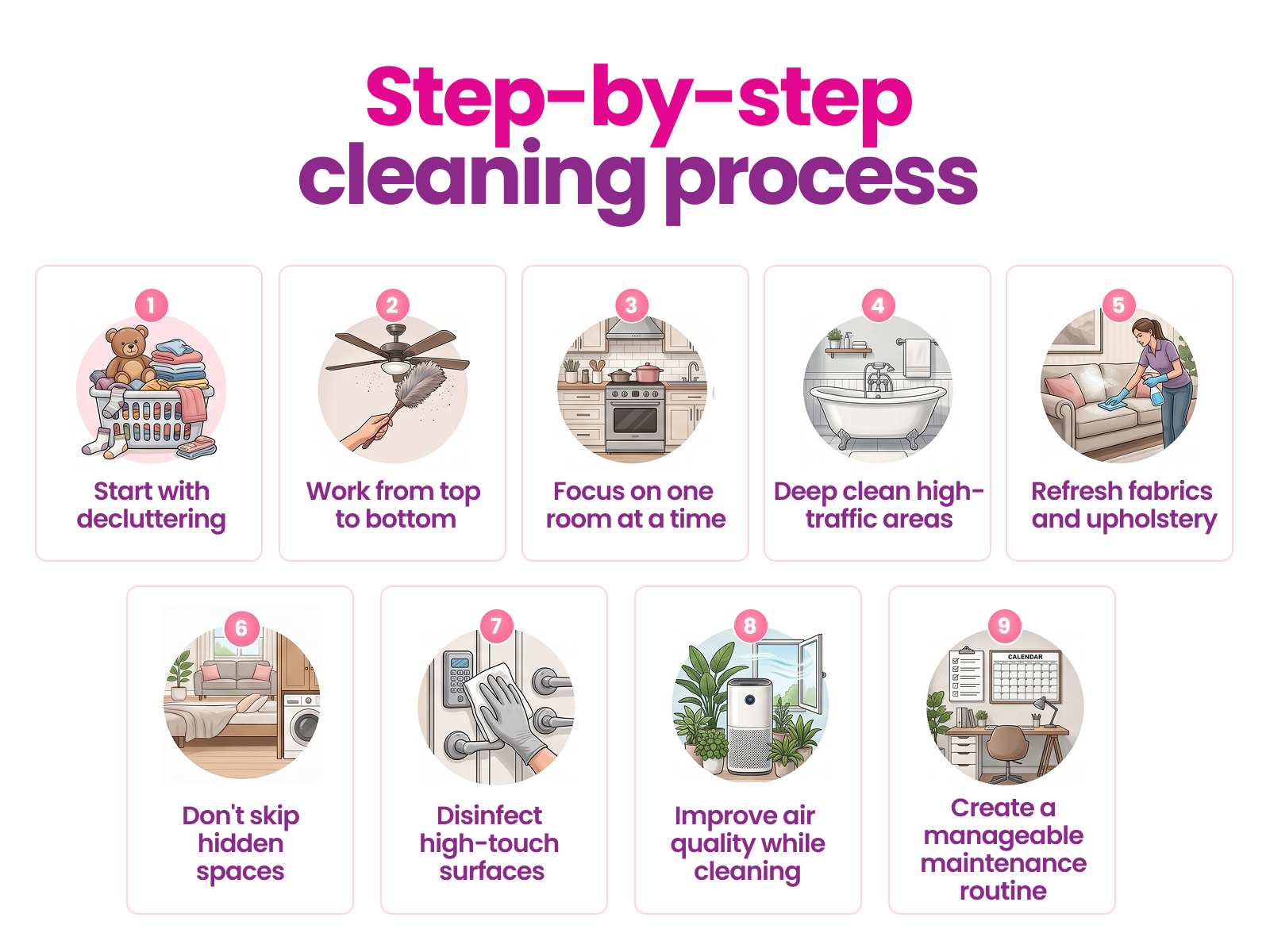
Step-by-step cleaning process
1. Start with decluttering
Before cleaning begins, remove unnecessary items from every room to create a clean, open space to work in. Clear countertops, pick up loose belongings, throw away trash, and gather anything that belongs elsewhere in the house. Clutter makes rooms feel messier and slows down the cleaning process by forcing you to work around unnecessary items.
2. Work from top to bottom
One of the smartest strategies is always cleaning from the highest surfaces downward. Dust ceiling fans, shelves, cabinet tops, and light fixtures before wiping furniture or vacuuming floors. As dust falls during cleaning, you avoid dirtying surfaces you’ve already finished.
3. Focus on one room at a time
Trying to tackle the entire house at once quickly becomes overwhelming. Instead, focus on fully completing one room before moving to the next. This approach keeps cleaning from feeling chaotic and gives you visible progress along the way, which helps maintain motivation.
4. Deep clean high-traffic areas
Kitchens, bathrooms, entryways, and living spaces experience the most daily wear and tear, which means they need the most attention during deep cleaning. Scrub sinks, disinfect countertops, wipe cabinet fronts, clean appliances, and thoroughly mop floors to remove built-up grime and bacteria.
Bathrooms require extra attention to toilets, tubs, faucets, and grout lines, where moisture and germs accumulate. Entryways also collect dirt, mud, and debris tracked in from outside.
5. Refresh fabrics and upholstery
Soft surfaces throughout your home trap dust, allergens, odors, and pet dander much faster than many homeowners realize. Vacuum carpets and upholstered furniture carefully, paying close attention to corners and creases where debris tends to collect.
Wash bedding, pillowcases, blankets, and curtains regularly to help improve indoor air quality while cleaning your home. You can also sprinkle baking soda on carpets or couches before vacuuming to help neutralize lingering odors.
Deep cleaning fabrics creates a fresher-feeling environment and helps reduce airborne irritants, especially in homes with pets, allergies, or high foot traffic.
6. Don’t skip hidden spaces
True deep cleaning means paying attention to the areas most people ignore during regular routines. Dust and grime build up quickly in overlooked spots, even if they aren’t immediately visible. Make time to clean baseboards, air vents, behind appliances, under furniture, door frames, and light switches.
These hidden areas accumulate significant amounts of dust and debris over time, affecting cleanliness and air quality. One of the most valuable home cleaning tips is remembering that a home often feels cleaner when the overlooked details receive attention, too.
7. Disinfect high-touch surfaces
Phones, remotes, door handles, appliance buttons, light switches, and countertops carry germs constantly throughout the day. Because people frequently touch these surfaces, you should disinfect them regularly during deep cleaning sessions. Use an appropriate disinfectant and allow it to sit long enough to kill bacteria effectively before wiping it away.
8. Improve air quality while cleaning
A clean home should also feel fresh and comfortable to breathe in. Open windows while cleaning your home to improve airflow and help remove dust particles, odors, and cleaning fumes from indoor spaces.
Replace HVAC filters regularly and wipe down vents to reduce circulating dust buildup. Vacuuming with a HEPA-filter vacuum also helps trap allergens rather than redistribute them into the air. Deep cleaning helps create a healthier indoor environment with cleaner air and fewer irritants.
9. Create a manageable maintenance routine
One of the most effective home cleaning tips is maintaining consistency afterward. Small daily tasks like wiping counters, putting away clutter, and running the dishwasher prevent messes from building up too quickly. Weekly maintenance tasks like vacuuming, bathroom cleaning, and laundry help keep your home manageable in the long term.
Occasional sessions then become far less overwhelming because dirt and clutter never have the chance to spiral out of control. Learning how to clean your house efficiently is less about perfection and more about building sustainable habits that fit your lifestyle.
Benefits of cleaning your home
Improves indoor air quality and reduces allergens
Dust, pollen, pet dander, and other allergens build up quickly throughout the home. Regular deep cleaning helps remove these particles, creating a fresher, easier-to-breathe environment.
Helps eliminate bacteria and germs from surfaces
High-touch areas like counters, remotes, and door handles collect bacteria every day. Disinfecting these surfaces regularly helps reduce the spread of germs and supports a healthier household.
Reduces stress and creates a calmer environment
Clutter and mess often make a home feel chaotic and overwhelming. A clean, organized space helps create a calmer atmosphere and makes everyday life feel more manageable.
Extends the lifespan of furniture, carpets, and appliances
Dirt and buildup slowly wear down surfaces, fabrics, and household materials. Consistent cleaning helps preserve the condition of your furniture and keeps appliances working more efficiently.
Makes everyday routines easier and more manageable
Cooking, laundry, and daily chores feel much simpler in a clean home. Staying consistent with cleaning your home prevents messes from becoming large, stressful projects later.
Creates a fresher, more welcoming atmosphere
Fresh-smelling rooms and dust-free surfaces instantly make a home feel more inviting. Guests and family members alike notice the difference when a space feels clean and comfortable.
Supports healthier living conditions for families and pets
Regular cleaning removes allergens, bacteria, and pet hair that can affect overall health. This is especially important for households with children, pets, allergies, or respiratory sensitivities.
Regular deep cleaning also helps homeowners stay ahead of larger messes before they become overwhelming. Small, consistent efforts make maintaining a clean home much easier in the long term.
Mistakes homeowners should avoid
- Skipping high-touch surfaces
- Using too much cleaning product, which leaves residue
- Ignoring fabrics like curtains and upholstery
- Cleaning without ventilation or airflow
- Waiting too long between sessions
- Trying to clean the entire house all at once
- Forgetting hidden areas like vents and baseboards
Understanding how to clean your house efficiently means avoiding these common habits that slow progress and reduce results.
Key cleaning statistics
- Indoor air contains up to five times more pollutants than outdoor air
- Regular deep cleaning significantly reduces allergens and bacteria buildup
- High-touch household surfaces may carry thousands of germs daily
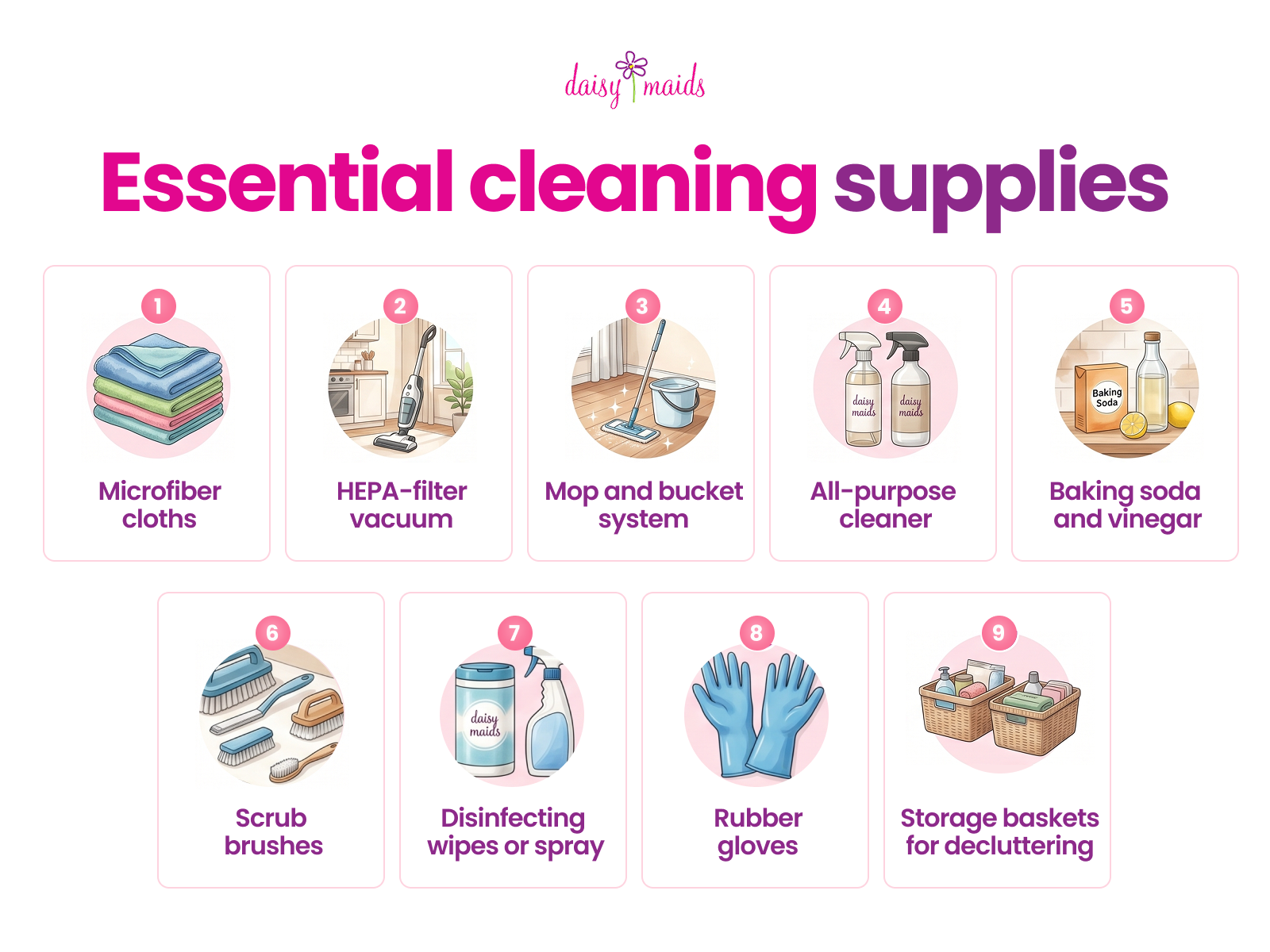
Essential cleaning supplies
- Microfiber cloths
- HEPA-filter vacuum
- Mop and bucket system
- All-purpose cleaner
- Baking soda and vinegar
- Scrub brushes
- Disinfecting wipes or spray
- Rubber gloves
- Storage baskets for decluttering
FAQ
Q: How often should I deep clean my home?
Most homes benefit from deep cleaning every three to six months. Homes with pets, children, or allergies may require more frequent attention to maintain healthy indoor air quality.
Q: What’s the difference between regular cleaning and deep cleaning?
Regular cleaning focuses on surface maintenance, while deep cleaning targets hidden buildup, bacteria, allergens, and overlooked spaces throughout the home.
Q: What are the best home cleaning tips for busy homeowners?
Focus on consistency instead of perfection. Daily tidying, weekly maintenance, and room-by-room cleaning schedules make cleaning your home more manageable.
Q: How do I make cleaning feel less overwhelming?
Break tasks into smaller sections and clean one room at a time. Learning how to clean your house gradually prevents burnout and keeps progress realistic.
Utah home cleaning considerations
Cleaning your home in Utah comes with unique challenges, given the state’s dry climate and changing seasons. Dust, pollen, and allergens accumulate quickly, especially during spring and summer, making regular deep cleaning essential for maintaining healthy indoor air quality. During the winter months, snow, mud, and road salt create additional messes in entryways and on floors.
One of the most valuable home cleaning tips for Utah homeowners is staying consistent with dusting, vacuuming, and replacing HVAC filters. Learning how to clean your house seasonally helps prevent buildup and keeps your home feeling fresher, healthier, and easier to maintain year-round.
Let Daisy Maids help
Cleaning your home doesn’t have to feel overwhelming when you have the right routines, tools, and mindset in place. From daily upkeep to seasonal deep cleaning, small consistent efforts create a healthier, more comfortable space that’s easier to maintain year-round.
And when life gets busy, or your home needs extra attention, Daisy Maids is here to help. Whether you need routine maintenance, detailed deep cleaning, or support tackling those hard-to-reach areas, our team delivers reliable service tailored to your needs. Let Daisy Maids handle the hard work so you can spend less time cleaning your home and more time enjoying it.