
Bathrooms take more daily wear than almost any other room in the house, and Utah’s dry climate and mineral-heavy water don’t make it easier. You’ll see issues like soap scum on shower doors and hard-water spots that etch faucets. Dust might also settle in vents faster than you expect.
A quick wipe-down keeps things looking okay, but deep cleaning your bathroom is what actually resets the space. Many homeowners eventually bring in a deep cleaning service when routine upkeep isn’t enough. This guide walks through a full bathroom deep cleaning process, along with tips on when Utah cleaning services can help.
Step-by-step process for deep cleaning your bathroom
Work top to bottom and dry to wet to avoid re-cleaning surfaces you’ve already finished.
- Clear and declutter. Remove bottles, towels, and any bath mats so every surface is accessible.
- Dust from the top down. Start with the exhaust fan cover and light fixtures before moving to shelving. Dust settles downward, so this order keeps you from undoing your own work.
- Wipe and disinfect high-touch surfaces. Light switches and door handles see more contact than most people realize, along with the toilet’s flush handle.
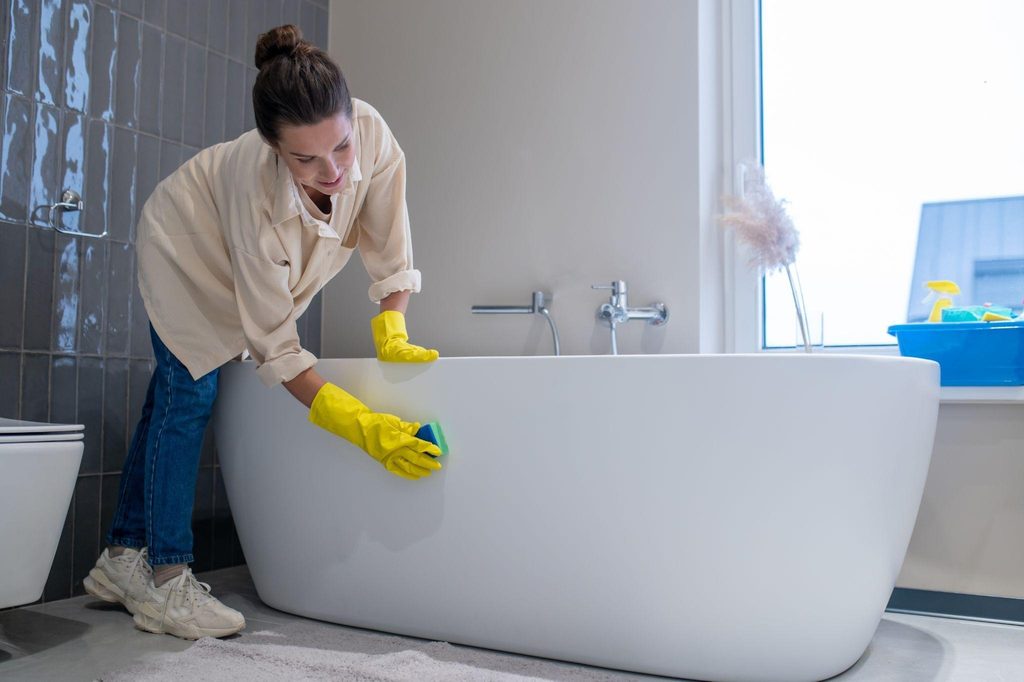
- Deep clean the shower and tub. Spray tile and grout with a cleaner suited for soap scum and hard-water buildup, then do the same for glass surfaces. Let it sit for a few minutes, then scrub grout lines with a stiff brush. Clean the showerhead and faucet, then rinse and dry the glass to reduce future spotting.
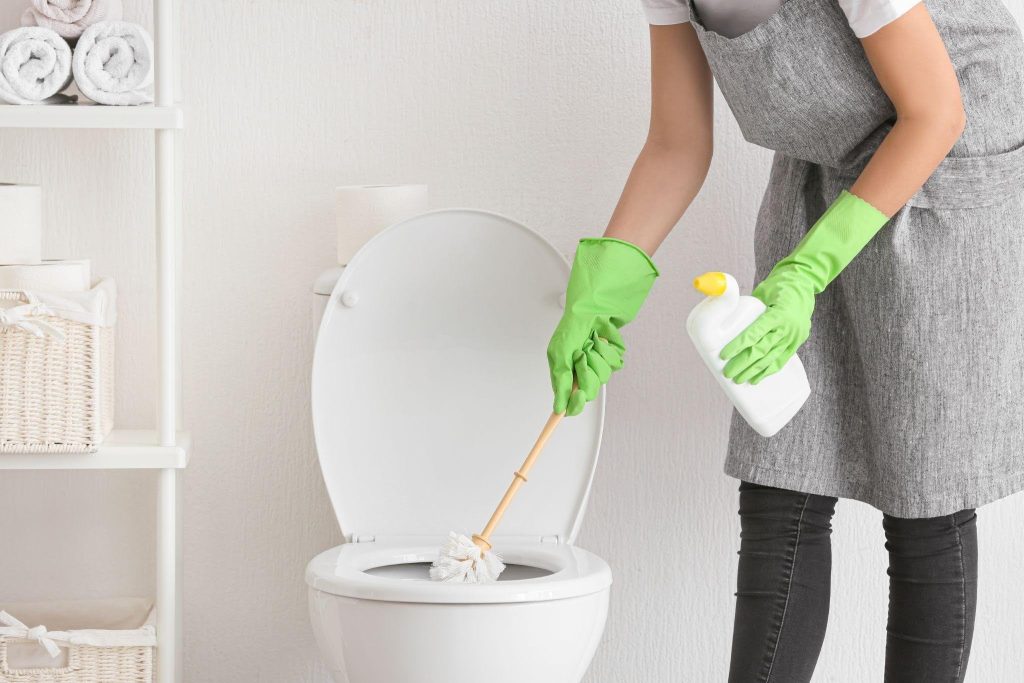
- Clean the toilet completely. Scrub the bowl first, then wipe the seat and tank, followed by the base and the floor around it.
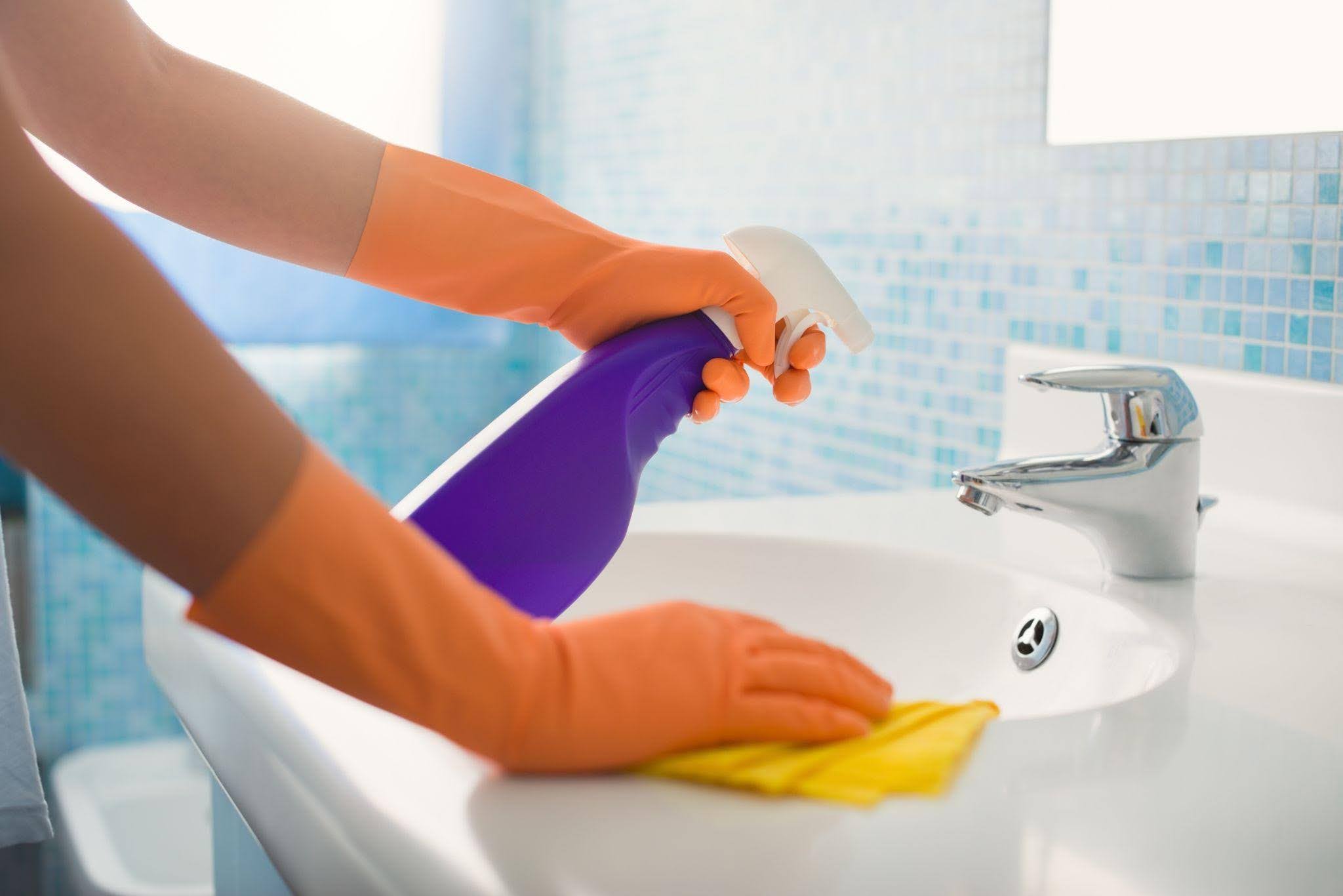
- Scrub sinks and counters, including where the counter meets the wall and around the faucet base.
- Clean mirrors and glass with a streak-free cleaner and a microfiber cloth.
- Wipe down cabinets, and empty drawers if time allows.
- Vacuum, then mop. Floors go last, so dust and hair don’t resettle on a wet surface.
Mold and mildew removal
Bathrooms trap moisture, which makes mold and mildew among the most common issues to address during a bathroom deep cleaning. Mildew usually shows up as light, surface-level spots in grout lines, around the tub, or on shower curtains, while mold tends to be darker and can grow in more persistent, harder-to-reach spots like behind caulk or under fixtures.
For small, surface-level areas:
- Ventilate the room first by opening a window or running the exhaust fan.
- Apply a cleaner labeled for mold and mildew, or a diluted bleach solution, to non-porous surfaces and let it sit for the time listed on the product label.
- Scrub with a stiff brush, focusing on grout lines and caulk edges.
- Rinse thoroughly and dry the area to slow regrowth.
- Keep the room ventilated after showers going forward, since ongoing moisture is what allows mold and mildew to return.
A mold remediation specialist should handle large, spreading, or recurring mold problems, as the underlying moisture source must be addressed first.
Hard water stains and mineral deposits
Utah’s mineral-heavy water leaves deposits on everything it comes into contact with. These stains are typically chalky, white, or cloudy and can dull glass and metal finishes over time if left alone.
To treat hard water stains and mineral deposits:
- Use a cleaner formulated for hard water, or a natural option like white vinegar, applied directly to the affected surface.
- Let it sit for several minutes so it has time to break down mineral buildup before wiping.
- For showerheads and faucets, soaking removable parts in a vinegar solution often loosens deposits more effectively than scrubbing alone.
- Dry glass and metal surfaces after rinsing, since air-drying gives minerals another chance to resettle.
- Using a squeegee after each shower helps slow new buildup between deep cleans.
Always check that a cleaner or method is safe for the specific surface. Vinegar can damage certain natural stone and finished metal surfaces.
Grout restoration and re-caulking
Grout and caulk take on a lot of wear in a bathroom, and neither lasts forever. Grout restoration and re-caulking are common parts of a more involved bathroom deep clean, especially in older bathrooms or ones with heavy daily use.
For grout that’s stained or worn but still intact:
- Scrub with a grout brush and a grout-safe cleaner, working in small sections.
- Apply a grout sealer once the grout is clean and fully dry to help resist future staining and moisture.
For caulk that’s cracked, peeling, or discolored:
- Remove old caulk with a caulk removal tool or a utility knife, taking care not to damage surrounding tile or the tub.
- Clean and dry the area completely, since caulk won’t adhere well to a damp or residue-covered surface.
- Apply a new bead of bathroom-rated caulk along the seam, smoothing it before it sets.
- Allow the caulk to cure fully, per the product’s instructions, before exposing it to water.
Cracked or missing caulk is often the entry point for the moisture that leads to the mold and mildew issues covered earlier, so addressing it during a deep clean can help prevent repeat problems.
Benefits of a thorough bathroom deep clean
A deep clean establishes a predictable baseline, making it easier to notice when something changes. It also cuts down on the daily guesswork of what’s actually clean versus what looks fine on the surface. For households with children or pets, keeping surfaces free of built-up residue supports a more comfortable, lower-maintenance home.
Common mistakes to avoid
- Cleaning floors first, which walks dust and residue back across a surface you already finished
- Skipping the exhaust fan, where dust buildup reduces airflow over time
- Using the wrong cleaner on grout or stone: Some acidic cleaners can damage natural stone or colored grout, so check labels first
- Not letting the cleaner sit before scrubbing: A few minutes of contact time on soap scum or hard-water buildup makes scrubbing far more effective
Tools and products that help
- Microfiber cloths, which trap dust and residue better than paper towels
- A grout brush or stiff-bristled brush for tile lines
- A squeegee for shower glass to reduce daily water-spot buildup
- A disinfecting cleaner labeled for bathroom or multi-surface use
- A cleaner formulated for hard-water and soap-scum removal, especially useful in areas with mineral-heavy water
- A separate cloth or brush kept exclusively for the toilet
FAQ
How often should a bathroom get a deep clean?
This depends on household size, usage, and personal preference. Many households find every one to three months works well, with lighter cleaning in between. Confirm a schedule that fits your home and routine.
What’s the difference between regular cleaning and deep cleaning?
Regular cleaning covers everyday surfaces like counters, toilets, and sinks. Bathroom deep cleaning includes grout, vents, fixtures, cabinet exteriors, and other areas that accumulate buildup more slowly but still need periodic attention.
Should I hire a deep cleaning service instead of doing it myself?
It depends on time and preference. A deep cleaning service can be worthwhile for a more thorough reset or hard-to-reach areas like grout and vents. Many households mix DIY upkeep with occasional professional visits.
Do Utah cleaning services handle hard water differently?
Many Utah cleaning services are familiar with the mineral buildup common in the state’s water and use cleaners formulated for it. Confirm specific products and methods with your provider.
Can I deep clean a bathroom with pets in the house?
Yes, though it’s worth using pet-safe products where pets have access and keeping tools and solutions out of reach during and after cleaning.
Keep your bathroom clean with Daisy Maids
Regularly deep cleaning your bathroom resets the space. It also clears the buildup that daily cleaning often misses and gives you a chance to catch small issues before they grow.
If you’re ready to spend less time catching up on chores and more time enjoying your home, call Daisy Maids. We’ll create a cleaning schedule that fits your household, whether you need a one-time reset, deep cleaning, or dependable recurring service.
Contact Daisy Maids to get started with a plan tailored to your home and routine.